Realism Tattoos
Realism Tattoo Ideas: Portraits, Animals, and Photorealistic Designs
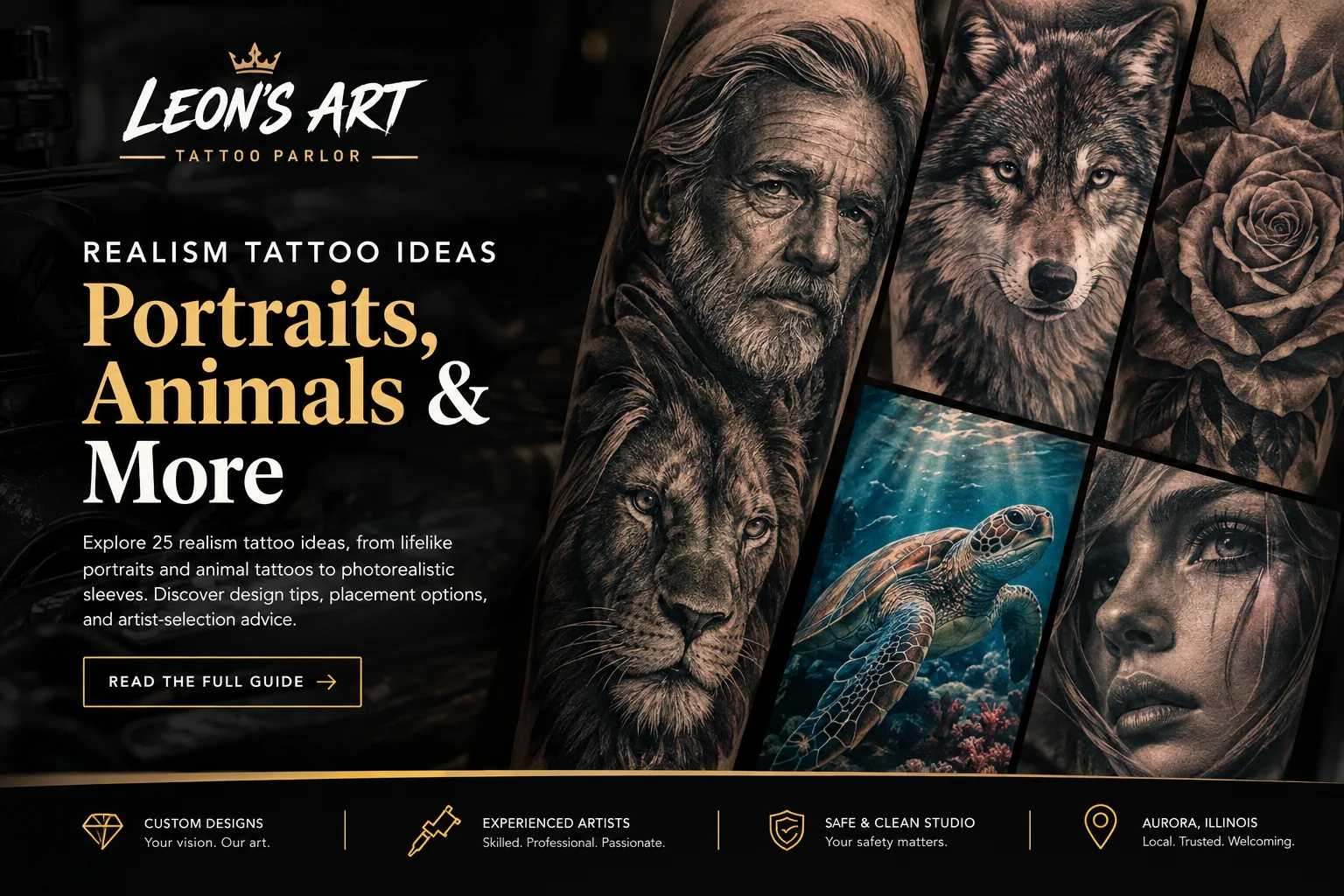
Explore 25 realism tattoo ideas, from lifelike portraits and animal tattoos to photorealistic sleeves. Discover design tips, placement options, and artist-selection advice.
What a realism tattoo can capture
Realism tattoos turn meaningful images into lifelike works of art on the skin. From detailed family portraits and powerful animal designs to photorealistic roses and dramatic black and grey sleeves, this tattoo style offers many possibilities for personal expression. Finding the right realism tattoo involves more than choosing an image you like. Size, placement, contrast, detail, and the skill of your tattoo artist all influence the final result. At Leon’s Art Tattoo Parlor, a tattoo should reflect your vision and work naturally with the body. This guide explores 25 realism tattoo ideas, explains differences between popular approaches, and shares practical tips for planning the next piece.
What is a realism tattoo?
A realism tattoo is designed to reproduce the appearance of a real person, animal, object, or scene as accurately as possible. Artists use shading, contrast, texture, proportion, and carefully placed highlights to create the impression of depth and dimension. Unlike traditional tattoo styles, which often use bold outlines and simplified shapes, realism focuses on lifelike details. A portrait might capture the expression in someone’s eyes, while an animal tattoo can emphasize fur, muscle, or the reflection of light. Realism tattoos can be created in black and grey or full color. Some designs feature a single subject, while others combine several images into a larger composition. Neither realism nor traditional is inherently better. The right choice depends on the look you want, the meaning behind the design, and the artistic approach that best expresses the idea. Black and grey realism uses black ink, diluted tones, and shading, and it works particularly well for portraits, skulls, wildlife, and dramatic compositions. Color realism uses different colors and transitions for flowers, colorful animals, portraits, and scenes that benefit from natural color. Your choice should depend on the subject, your preferred aesthetic, the available space, and the artist’s experience with the style.
25 realism tattoo ideas
The best realism tattoo ideas combine a visually compelling subject with a design that has personal meaning. These 25 options are starting points for planning the next tattoo.
Family Portrait Tattoos
Family portrait tattoos celebrate the people who matter most. A realistic portrait of a parent, child, grandparent, or other loved one can preserve a special memory. Start with a clear reference photograph that shows the person’s features and expression so the artist can judge whether the image will translate and whether it needs to be enlarged. Best placements include the forearm, upper arm, chest, or thigh. Choose an image with good lighting and clear facial features rather than a heavily filtered photograph.
Memorial Portrait Tattoos
Memorial tattoos honor someone who has passed away or preserve the memory of an important relationship. Some designs feature a realistic portrait, while others combine a photograph-inspired image with a name, meaningful date, flower, or symbolic object. The tattoo can be subtle or detailed. The most important consideration is an image and composition that feel personally significant. Best placements include the upper arm, chest, forearm, or shoulder. Keep decorative elements balanced so the portrait remains the main focus.
Celebrity Portrait Tattoos
Celebrity portrait tattoos celebrate musicians, actors, athletes, and other influential figures. These designs can capture a recognizable expression, signature hairstyle, or memorable moment. Because likeness is central, the reference image and the artist’s ability to reproduce facial proportions are especially important. Best placements include the upper arm, forearm, or thigh. Select a high-resolution image with clear facial details and a composition that suits the intended placement.
Couple Portrait Tattoos
Couple portrait tattoos can represent a romantic relationship, a wedding memory, or a meaningful chapter in life. Some people prefer matching portraits, while others choose one image that captures a special moment together. Consider whether you want a detailed portrait, a smaller image, or a design that combines two subjects. Best placements include the forearm, upper arm, chest, or thigh. Think about how the design will look on its own as well as how it connects to any matching tattoo.
Baby and Child Portrait Tattoos
A realistic tattoo of a child can commemorate a birth, celebrate parenthood, or preserve a favorite family photograph. The design might feature a close-up portrait, a candid expression, or a meaningful moment. Facial details require careful planning, particularly when the intended tattoo is small. Best placements include the forearm, upper arm, chest, or shoulder. Choose a photograph with a natural expression and enough detail to guide the artist.
Lion Realism Tattoos
Lion tattoos are popular among people who associate the animal with courage, strength, leadership, or resilience. A realistic lion can feature a detailed mane, intense eyes, and dramatic shading. Black and grey versions emphasize contrast and texture, while color realism creates a different visual effect. Best placements include the upper arm, shoulder, chest, or calf. Allow enough room for the mane and facial features. A design that is too small may not accommodate every detail.
Wolf Realism Tattoos
Wolf tattoos often symbolize loyalty, independence, family, and a connection with nature. Realistic designs may feature a close-up portrait, a howling wolf, or an animal within a forest landscape. The direction of the wolf’s gaze and the surrounding composition can influence the mood. Best placements include the forearm, upper arm, shoulder, or calf. Decide whether you prefer a detailed face, a full-body image, or a scene with additional elements before finalizing the size.
Tiger Realism Tattoos
Tiger realism tattoos are known for striking stripes, muscular forms, and expressive faces. They can represent strength, determination, confidence, or personal resilience. A tiger’s body can also work with the natural curves of an arm, shoulder, or leg, which makes it suitable for standalone pieces and larger compositions. Best placements include the upper arm, shoulder, thigh, or calf. Consider the direction of movement and the shape of the body when planning the design.
Eagle Realism Tattoos
An eagle tattoo can represent freedom, vision, ambition, or strength. Realistic designs may feature a close-up head, outstretched wings, or an eagle in flight. Feather texture and wing proportions are important, and larger placements provide more space for those details. Best placements include the chest, upper arm, back, or shoulder. If you want outstretched wings, choose a body area that can accommodate the full shape without compressing the composition.
Dog and Cat Portrait Tattoos
Pet portrait tattoos celebrate the bond people share with their animals. A realistic dog or cat portrait can capture distinctive markings, eye color, facial expression, and other recognizable features. Some designs focus on the face, while others incorporate a name, paw print, or small symbolic detail. Best placements include the forearm, upper arm, chest, or thigh. Use a photograph that clearly shows your pet’s unique features, and ask how the reference will translate into black and grey or color.
Deer and Stag Realism Tattoos
Deer and stag tattoos can create elegant, nature-inspired designs. Their antlers, textured fur, and distinctive silhouettes provide opportunities for detailed realism. A deer portrait may work as a standalone image, while a stag surrounded by trees or mountains can become part of a larger landscape. Best placements include the forearm, calf, upper arm, or back. Plan the antlers and surrounding space so the design stays balanced with the natural shape of the body.
Snake Realism Tattoos
Snake tattoos offer flowing shapes, detailed scales, and opportunities for dramatic shading. Depending on the design, a snake can represent transformation, renewal, wisdom, or personal growth. Realistic snakes can wrap around an arm or leg, follow a curved composition, or appear as a close-up with detailed texture. Best placements include the forearm, upper arm, calf, thigh, or back. Discuss the direction and movement so the snake follows the body’s contours.
Butterfly Realism Tattoos
Butterfly tattoos combine intricate wing patterns with a delicate, recognizable silhouette. Color realism can reproduce vivid wing colors, while black and grey shading creates a more understated appearance. Butterflies can be chosen for their beauty or for personal associations with transformation and change. Best placements include the forearm, shoulder, upper arm, or thigh. Keep the wing patterns proportional to the final tattoo size to help maintain clarity.
Owl Realism Tattoos
Owl tattoos are often associated with wisdom, observation, and mystery. Large eyes, layered feathers, and distinctive facial features make them appealing subjects for realistic designs. An owl can be portrayed with folded wings, perched on a branch, or in flight, and background elements can add context without overwhelming the subject. Best placements include the upper arm, shoulder, chest, or calf. Decide whether the eyes, feathers, or wings should be the main focal point before choosing the composition.
Ocean and Underwater Realism Tattoos
Ocean-inspired realism tattoos can feature sharks, sea turtles, dolphins, whales, or underwater scenes. These designs can celebrate a connection to the ocean, a memorable trip, or an interest in marine life. Water, light, and movement add complexity, so the artist needs to balance the main subject with the surrounding environment. Best placements include the forearm, upper arm, thigh, chest, or back. A complete underwater scene generally requires more space than a single marine animal.
Realistic Rose Tattoos
Rose tattoos remain popular in realism because layered petals, curved edges, and natural shadows create depth. They can symbolize love, remembrance, beauty, or personal milestones. A single rose can stand alone, while several roses can be combined with portraits, clocks, or other meaningful elements. Best placements include the forearm, upper arm, shoulder, chest, or thigh. Decide whether you prefer a fully open bloom, a partially opened rose, or a rosebud, because each creates a different composition.
Pocket Watch Realism Tattoos
A realistic pocket watch can represent the passage of time, a significant life event, or the importance of a particular memory. Some designs incorporate Roman numerals, a meaningful time, flowers, or a portrait. The watch face, hands, metal texture, and shadows contribute to the sense of realism. Best placements include the forearm, upper arm, chest, or calf. If you want lettering or numerals, make sure the design is large enough for those details to remain clear.
Skull Realism Tattoos
Skull tattoos can feature detailed bone structure, deep shadows, and dramatic lighting. They may represent mortality, transformation, remembrance, or an appreciation for dark artistic imagery. A realistic skull can stand alone or be combined with roses, clocks, smoke, or other subjects. Best placements include the forearm, upper arm, chest, shoulder, or calf. Decide whether you want a clean anatomical appearance or a darker, more dramatic composition.
Eye Realism Tattoos
Eye tattoos emphasize reflections, eyelids, lashes, and subtle changes in tone. Some designs reproduce a person’s eye, while others use a symbolic or artistic eye as the central subject. Because the eye contains several small details, the artist must consider the intended size and the contrast needed to make the design work. Best placements include the forearm, upper arm, or other areas with enough space for the composition. Use a sharp reference image and discuss how much surrounding facial detail should be included.
Religious and Spiritual Realism Tattoos
Religious and spiritual realism tattoos can feature meaningful figures, scenes, or symbols connected to personal beliefs. Examples include detailed portraits of religious figures, hands in prayer, or compositions inspired by significant spiritual imagery. The design can be simple and focused or part of a larger piece. Best placements include the forearm, upper arm, chest, or back. Share the meaning and essential details of the image so the composition reflects what matters most to you.
Black and Grey Realism Sleeves
A black and grey realism sleeve combines multiple images into a connected composition that covers part or all of the arm. It may include portraits, animals, flowers, clocks, or other meaningful subjects. Rather than treating every image as a separate tattoo, the artist plans how the elements relate through shading, contrast, transitions, and overall flow. Best placements are a half sleeve or a full sleeve. Plan the sleeve as a whole, even if you intend to complete it across multiple appointments.
Color Realism Sleeves
Color realism sleeves use lifelike color, detailed shading, and carefully coordinated subjects. Popular themes include wildlife, portraits, flowers, and scenes that combine several colors and textures. A successful sleeve needs more than detailed individual images. The colors and composition should work together across the arm. Best placements are a half sleeve or a full sleeve. Discuss the overall palette and how the different elements will connect before starting the first section.
Realistic Landscape Tattoos
Landscape realism tattoos capture places, scenery, and natural environments. Mountains, forests, lakes, sunsets, and familiar locations can represent adventure, personal memories, or a connection to nature. Some designs focus on a single landscape, while others add wildlife or architectural features. Best placements include the forearm, upper arm, calf, thigh, or back. Select a reference image with a clear focal point. Too many small background elements can make a compact design difficult to read.
Mythical Creature Realism Tattoos
Mythical creature tattoos combine imaginative subjects with realistic textures, lighting, and proportions. Dragons, phoenixes, and other fantasy-inspired figures can be designed with detailed scales, feathers, wings, and dramatic backgrounds. Although the subject may be fictional, the rendering can still emphasize realistic depth and texture. Best placements include the upper arm, shoulder, thigh, chest, or back. Decide which features matter most, such as wings, facial expression, scales, or movement, and prioritize them in the composition.
Mixed-Subject Realism Tattoos
Mixed-subject realism tattoos combine several images into a personalized piece. A design might feature a family portrait, a rose, and a pocket watch, with each element representing a different part of someone’s story. This approach works particularly well for larger tattoos because the artist has more room to arrange the subjects and create visual connections. Best placements include a full sleeve, half sleeve, chest, thigh, or back. Choose a central subject and a few supporting elements so the tattoo does not feel crowded.
Best body placements for realism tattoos
Choosing the right placement is an important part of designing a realism tattoo. The available space influences the size of the subject, the amount of detail that can be included, and how the tattoo follows the body’s contours.
Forearm and upper arm
The forearm and upper arm are versatile choices for portraits, animal faces, flowers, and medium-sized realism designs. They also allow many tattoos to be viewed easily. The forearm can work well for vertically oriented designs, while the upper arm and shoulder offer a curved surface for larger subjects.
Chest and back
The chest and back provide room for detailed compositions, large portraits, and multiple connected subjects. These areas can accommodate wider designs that would be difficult to fit on a smaller body part, and they are useful when the tattoo needs background elements or several subjects arranged together.
Thigh and calf
The thigh offers substantial space for portraits, animals, and larger scenes. The calf can suit vertically oriented designs, including wolves, snakes, and other subjects with a natural direction of movement. Consider the design’s proportions and how the image will appear when standing, sitting, or moving.
Sleeves and large-scale designs
A realism sleeve requires careful planning because the artwork follows a curved, moving surface. The artist needs to consider how each element connects to the next and how the overall design will look from different angles. If you are planning a full sleeve, discuss the entire concept before starting, even when the tattoo will be completed in stages.
How to choose the right realism tattoo design
With so many possibilities, narrowing down your ideas can feel overwhelming. These practical considerations can help you prepare for a consultation.
Start with the meaning
Think about why you want the tattoo. It might represent a person, a relationship, a personal achievement, a favorite animal, or simply an image you find visually compelling. You do not need a deep symbolic meaning for every tattoo. What matters is choosing something you will continue to appreciate.
Choose high-quality reference images
Reference images help communicate your vision. Look for photographs that clearly show the subject’s features, lighting, and proportions. If you have several references, identify what you like about each one. Your artist can then help combine those preferences into an original composition.
Think about size, detail, and placement
A small design may not have enough room for every feature in a complicated portrait or landscape. Enlarging the image or simplifying certain elements can help preserve its appearance. The same design can also look different depending on where it is tattooed. Discuss visibility, body contours, movement, and shape before settling on a location.
Decide between black and grey and color
Think about whether you prefer the contrast of black and grey or the visual impact of color. Both approaches can create realistic results, but they require different design decisions. Your artist can explain how the subject, available space, reference photograph, and desired appearance influence the choice.
Allow the artist to guide the design
A reference image is a starting point rather than a guarantee that every detail can be reproduced exactly. Your artist may recommend adjusting the composition, simplifying the background, changing the size, or modifying the contrast so the image works on the skin.
How to choose a realism tattoo artist
Choosing an artist is one of the most important decisions when planning a realism tattoo. A strong reference image is helpful, but the final result depends on how effectively the artist translates that image into tattoo artwork. Do not choose an artist based on photographs alone. Make sure you feel comfortable with the consultation and the studio’s approach to safe tattooing.
Review the portfolio and healed work
Look for examples that match the kind of tattoo you want. If you are planning a portrait, examine portrait work. If you want a realistic animal, look for animal tattoos. Pay attention to proportions, shading, contrast, recognizable features, and composition. Fresh tattoos can look different from healed tattoos, so review healed work when you can.
Discuss expectations and studio care
Before committing to a design, discuss the reference images, placement, approximate size, preferred style, and any important details. A consultation should give you room to ask questions and understand the proposed approach. Also consider the studio’s hygiene practices, communication, and aftercare guidance.
Do realism tattoos age well?
Realism tattoos can retain their character over time, but all tattoos change as the skin ages. Sun exposure, placement, skin changes, ink characteristics, and the original design can affect how a tattoo looks in the years after it is completed. Contrast helps distinguish important features, such as the eyes, nose, and mouth in a portrait or fur and feathers in an animal tattoo. A design with insufficient contrast may become harder to read. Extremely small details can also be difficult to reproduce clearly. Giving a design enough space allows the artist to work with the proportions and tonal differences the image needs.
Care and the appointment
Follow the specific aftercare instructions provided by your tattoo artist. Keep the area clean as directed, avoid picking or scratching the healing skin, and follow guidance about clothing, activities, and exposure to water while the tattoo heals. Once healed, protecting the tattoo from excessive sun exposure can help preserve its appearance. Seek professional medical advice if you develop signs of infection or an unexpected reaction during healing. Good aftercare supports healing, but it cannot prevent every change that may occur over the life of a tattoo. A typical appointment moves from consultation and design planning, through design preparation and placement, to tattooing and aftercare. The length of the session depends on the size, detail, placement, and complexity of the work, and larger pieces may require multiple sessions.
Plan a realism tattoo at the studio
A realism tattoo can capture a meaningful person, celebrate a beloved animal, or transform an image you admire into a lasting piece of body art. The best designs balance personal meaning with thoughtful composition, appropriate sizing, and the technical demands of tattooing. Whether you are considering a lifelike portrait, a detailed animal tattoo, a photorealistic rose, or a complete realism sleeve, taking time to plan the design can help you make a more informed decision. At Leon’s Art Tattoo Parlor in Aurora, Illinois, you can explore tattoo possibilities and discuss your ideas for a custom piece.
Frequently asked questions
Realism tattoos aim to make a subject look lifelike. Photorealism places particular emphasis on reproducing the appearance of a photograph, including fine details, lighting, and tonal transitions. The terms are often used interchangeably in tattoo discussions.
Popular ideas include family portraits, pet portraits, lions, wolves, roses, skulls, pocket watches, eyes, and nature scenes. The best option depends on your preferences, the meaning behind the design, and the placement you choose.
Neither is universally better. Black and grey realism emphasizes tonal contrast and shading, while color realism uses color transitions to create depth. Your subject, preferred appearance, and the artist’s expertise can help determine the right approach.
Common placements include the forearm, upper arm, shoulder, chest, thigh, calf, and back. The best location depends on the tattoo’s size, shape, detail, visibility, and how it fits the body’s contours.
There is no universal minimum size. The appropriate size depends on the portrait, the level of detail, and the chosen placement. Your artist can recommend a size that allows the important facial features to remain clear.
All tattoos can change over time. Sun exposure, skin changes, placement, and the original design can influence their appearance. Appropriate aftercare and sun protection can help maintain the tattoo’s appearance.
Yes. Realism can be combined with lettering, geometric elements, illustrative details, and other styles. The composition should be planned carefully so that the different elements complement one another.
In many cases, yes. A personal photograph can serve as a reference for a portrait, pet tattoo, or meaningful scene. Your artist will assess the image quality, composition, and level of detail before determining how it can be adapted.
The time required depends on the tattoo’s size, detail, placement, and complexity. A small design may take considerably less time than a detailed portrait or full sleeve. Ask your artist for an estimate after discussing the specific design.
Bring clear reference images, think about your preferred placement and approximate size, and be ready to explain what you want the tattoo to communicate. You can also ask about the design process, estimated time, pricing, and aftercare.
For questions about a tattoo idea, contact the studio to discuss your project and next steps.
Contact the studio